What Your Dashboard Warning Lights Mean
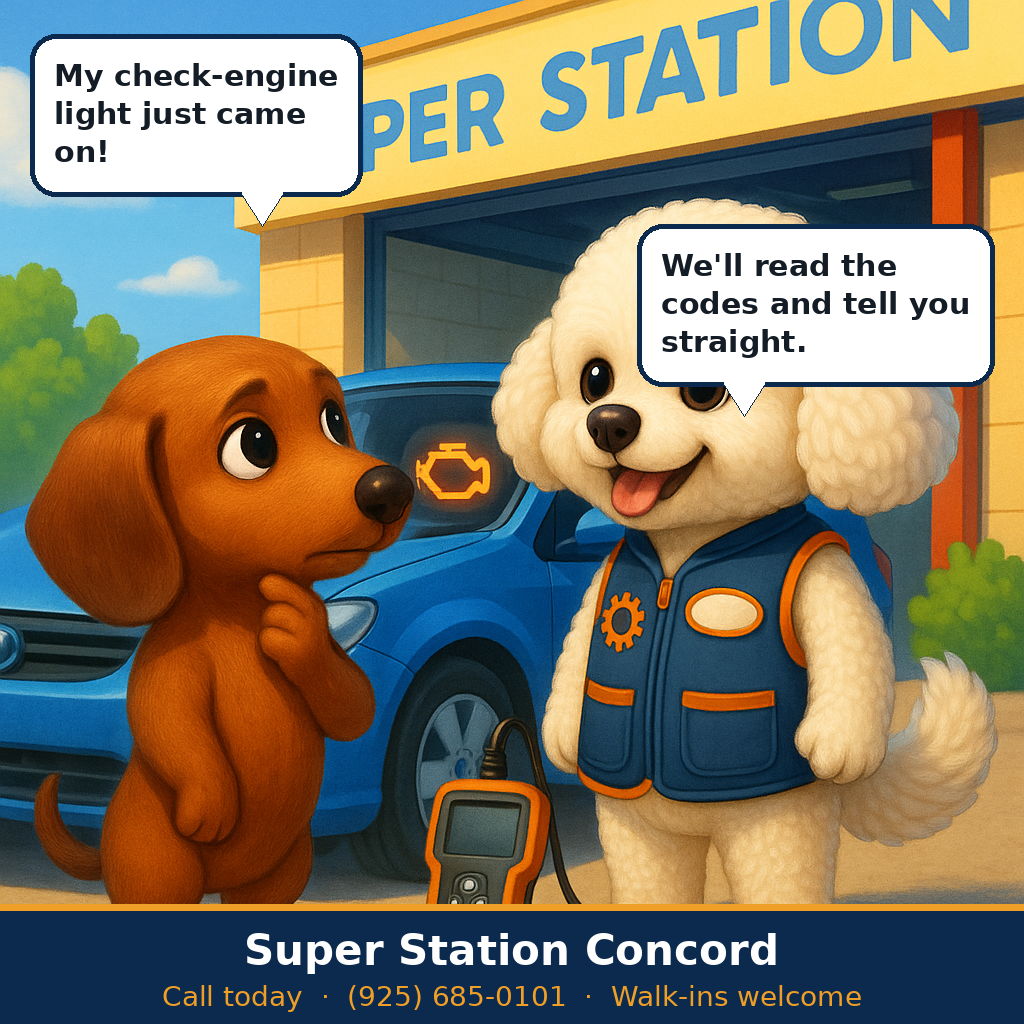
Your Dashboard Is Trying to Tell You Something
That little glowing symbol on your instrument panel can feel alarming — or easy to ignore. Neither reaction is quite right. Dashboard warning lights exist on a spectrum, from "pull over immediately" to "schedule something soon." Knowing the difference can protect your engine, your safety, and your wallet.
The Most Common Warning Lights, Explained
Check Engine (Malfunction Indicator Light)
This is the most misunderstood light on the dashboard. It can mean anything from a loose gas cap to a misfiring cylinder. A steady check engine light generally means get it diagnosed within a few days. A flashing check engine light means a misfire is actively happening — ease off the throttle and get it checked the same day to avoid catalytic converter damage.
Oil Pressure
This one is serious. A low oil pressure warning — usually an oil can icon — means your engine may not be getting adequate lubrication. Stop driving as soon as it is safe to do so. Check the oil level first; if it is fine and the light stays on, the pump or sensor may be failing. Running an engine with low oil pressure can cause permanent internal damage within minutes.
Battery / Charging System
A battery light doesn't always mean a dead battery. It often points to a failing alternator that is no longer charging the battery while you drive. The car may run fine for a short while on battery power alone, but eventually everything shuts down. Head straight to a shop rather than running errands first.
Brake Warning Light
If this light comes on and your parking brake is fully released, check your brake fluid level right away. Low fluid can indicate worn brake pads or a leak in the system. Either way, brakes are not something to defer. Get it inspected the same day.
ABS (Anti-Lock Braking System)
An ABS light means the anti-lock system has detected a fault. Your regular brakes will likely still work, but ABS — which prevents wheel lockup during hard stops — may not function. It is safe to drive carefully to a shop, but don't postpone it.
Coolant Temperature
If the temperature gauge climbs into the red or a thermometer icon appears, your engine is overheating. Pull over and turn off the engine. Continuing to drive can warp the cylinder head or crack the engine block — repairs that cost thousands. Let the engine cool before checking the coolant level.
Tire Pressure (TPMS)
The TPMS light — a cross-section of a tire with an exclamation point — means one or more tires is significantly under- or over-inflated. Check pressures at the nearest air station. If a tire looks visually flat, do not drive on it. Correct inflation improves safety, fuel economy, and tire life.
Stop Now vs. Get It Checked Soon
- Stop driving immediately: Oil pressure, coolant temperature (red), flashing check engine, brake warning with no fluid
- Get to a shop the same day: Battery/charging, brake warning with fluid present, visually flat tire
- Schedule within a few days: Steady check engine, ABS, TPMS with tires that look normal
Q: Can I just clear the light myself and move on?
Resetting a warning light without fixing the underlying problem only hides the symptom — the code and the fault are still there. A diagnostic scan reads the stored fault codes and gives you the actual starting point for a repair, which saves time and guesswork. Think of it as reading the footnote before deciding whether to worry.
One Final Note
Warning lights are your car's way of communicating. The more you understand them, the less stressful they are. When you need a diagnostic scan or just a second opinion on what a light means, the team at Super Station Concord at 1650 Monument Blvd is happy to help — give us a call at (925) 685-0101.